

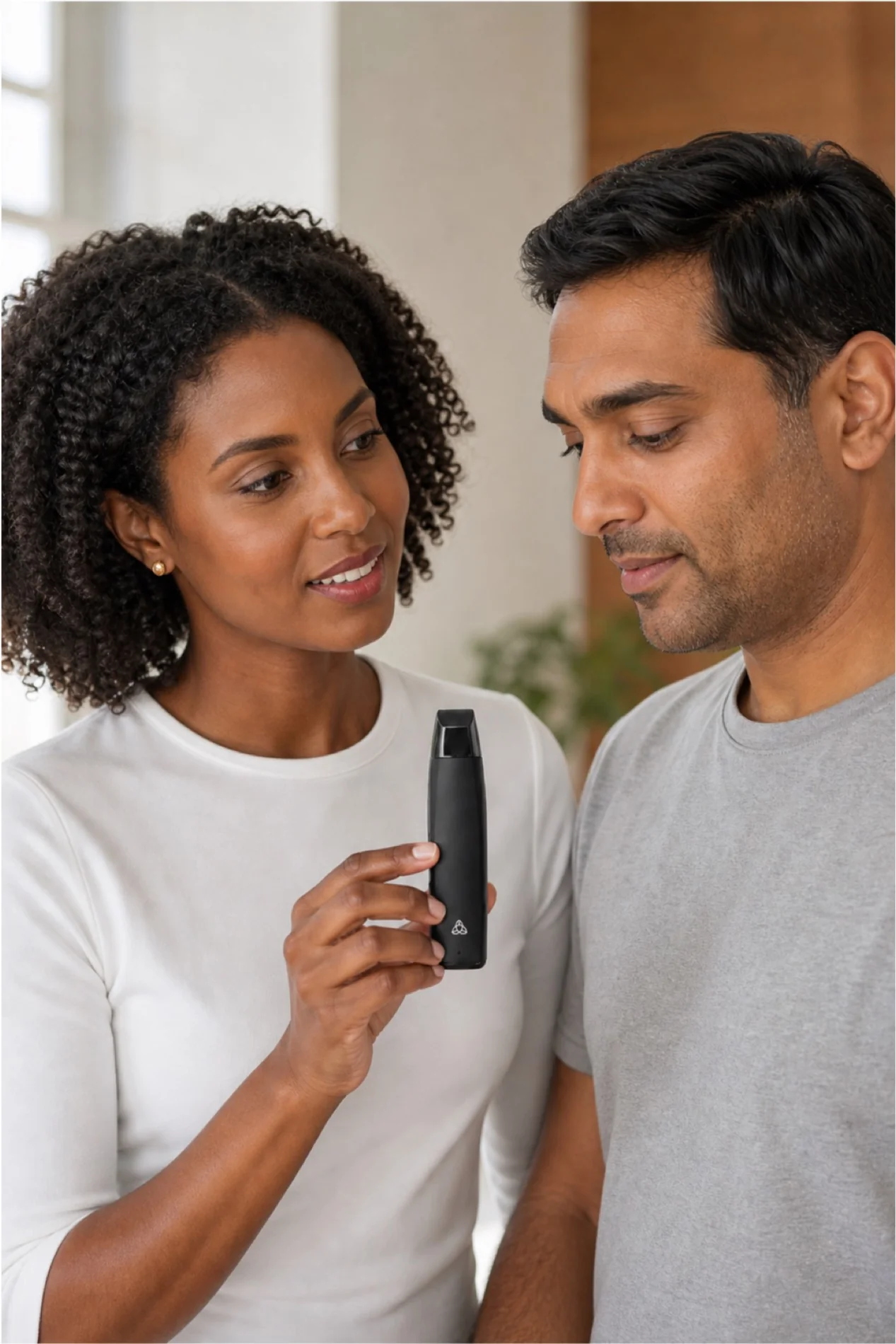
Why device choice matters
For patients prescribed dried medicinal cannabis flower for inhalation, the device used to administer the medicine is not a minor detail. A vaporisation device is the means by which the medicine is heated, vapourised, and inhaled — and its design, materials, and performance characteristics directly affect the patient's experience of using the medicine.
Key considerations include whether the device delivers a consistent and accurate temperature, whether the materials it uses are safe for inhalation, whether it is easy to use (including for people with reduced manual dexterity), and whether it has been assessed by a regulatory authority as a medical device.
Not all vaporisers sold in Australia and New Zealand are medical devices — many are consumer products designed for tobacco, nicotine, or aromatherapy use that have not been subject to medical device regulation. Understanding the difference is useful for patients and the healthcare professionals advising them.
The regulatory baseline: what to check first
Before assessing any other feature of a vaporisation device, a helpful first step is to check its regulatory status. In Australia, the Therapeutic Goods Administration maintains a public register of approved therapeutic goods, the ARTG. Medical devices on the ARTG have been assessed for safety and performance by the TGA through a conformity assessment process, the rigor of which depends on device class.
A therapeutic cannabis vaporiser suitable for medical use should be a Class IIb ARTG-listed medical device. In New Zealand, medical devices are registered through Medsafe's WAND system. Checking that a device appears on these registers — and understanding what class it holds — is the most important regulatory verification step.
The TGA ARTG search is available at tga.gov.au. The Grenco Medical Elite II Vaporiser holds ARTG Entry 526764 as a Class IIb medical device and is Medsafe WAND registered.
Key device features for therapeutic use
Beyond regulatory status, several device features are worth understanding when evaluating a vaporiser for therapeutic cannabis use.
Temperature control is one of the most important: different cannabinoids and terpenes have different volatilisation points, and the temperature used during vaporisation affects which compounds are released and in what proportion. A device with precise, adjustable temperature control gives the patient and prescriber more flexibility and supports the prescriber's ability to provide guidance aligned with the patient's needs.
Materials in the vapour path — the mouthpiece, chamber, and airpath — should be biocompatible and not introduce contaminants into the inhaled vapour. Medical devices assessed against ISO 10993 standards have been evaluated for biocompatibility.
Ease of use also matters: a magnetic mouthpiece that attaches securely, a chamber that is straightforward to load and clean, and clear operational indicators support consistent use by patients who may have medical conditions affecting dexterity or cognitive function.
Practical questions to ask
When a patient or prescriber is evaluating a vaporisation device, several practical questions are worth raising.
- Is the device listed on the ARTG as a Class IIb medical device, and what is its ARTG entry number?
- Has the device been tested against recognised safety and performance standards, and are test results available?
- What materials are used in the vapour path, and have they been assessed for biocompatibility?
- What is the temperature accuracy and range of the device?
- Is there a manufacturer's warranty, and is it supported locally?
- Are there Instructions for Use that describe the intended use, cleaning, and safety information?
- Does the device have a locally accessible customer support contact?
These questions can be raised with the prescriber, pharmacist, or device supplier. Clear answers to all of them should be available for a device that is genuinely positioned for therapeutic medical use.
Working with your prescriber and pharmacist
Device selection for therapeutic cannabis use is best approached as a collaborative process involving the patient, their prescriber, and their pharmacist. The prescriber is best placed to consider which administration method and device type is appropriate for the patient's medical situation, physical capabilities, and prescribed medicine.
Some patients are prescribed dried flower, which requires a vaporiser; others may be prescribed oil or capsule products, which do not. When a vaporiser is indicated, the prescriber may have a preferred or recommended device. The pharmacist can assist with dispensing, storage guidance, and practical device-use support.
Patients should not purchase a vaporiser independently and then ask for it to be endorsed retroactively — device choice should be part of the treatment planning conversation. Healthcare professionals who want clinical or technical information about a specific device can contact the device sponsor or distributor directly.
Device access in Australia and New Zealand
In Australia, the Grenco Medical Elite II is available through Mood State Medical, the authorised Australian sponsor and distributor. Mood State Medical holds the ARTG sponsorship for Entry 526764 and provides patient and healthcare professional support.
In New Zealand, the Elite II is available through Veridion Group, the authorised New Zealand distributor. Both distributors maintain product support contacts and can assist with device enquiries, warranty claims, and replacement part information.
Pharmacy availability of the Elite II in Australia is expanding; an in-store pharmacy stockist list is being developed and will be published on the Grenco Medical website as local pharmacies begin carrying the device. Patients in Australia and New Zealand who have been prescribed dried flower medicinal cannabis can ask their prescriber or pharmacist about device options and where to obtain them.