

What is the ARTG?
The Australian Register of Therapeutic Goods (ARTG) is the public register maintained by the Therapeutic Goods Administration (TGA) of therapeutic goods lawfully available for supply in Australia. It includes medicines, medical devices, biologicals, and other therapeutic goods that have met the relevant regulatory requirements for inclusion. For a medical device to be legally supplied in Australia, it must either be included on the ARTG or be eligible for an exemption under the Therapeutic Goods Act.
The ARTG is a public database — anyone can search it using the TGA's online ARTG search tool at tga.gov.au. Each entry in the ARTG includes information about the sponsor (the company responsible for the device in Australia), the device description, the device class, the intended purpose, and when the entry started.
The register provides a transparent, verifiable record that patients, healthcare professionals, and pharmacists can check independently. This means that if a device has been represented to you as ARTG-registered, you can go and confirm that yourself using the official TGA search — no intermediary required.
For patients navigating the medicinal cannabis space, the ARTG is one of several tools available for understanding what devices have met Australian regulatory requirements. It does not replace clinical advice, but it does provide a factual baseline that anyone can access.
Why ARTG registration matters for patients
For patients using a medical device as part of a treatment plan — such as a vaporiser for therapeutic cannabis use — ARTG registration means the device has been reviewed by an independent conformity assessment body and the TGA has confirmed it meets the requirements for the device class. It means the manufacturer is subject to quality management requirements, the device has been evaluated for safety and performance, and the sponsor has ongoing post-market obligations including adverse event reporting.
This is different from a device that is sold in a retail store without a TGA medical device listing. Consumer vaporisers — even high-quality ones — have generally not been through the TGA medical device assessment process. For patients who are accessing a prescribed medicine and need a device to administer it, the regulatory status of that device is a reasonable part of the assessment process.
A patient can check the ARTG to verify that what they have been recommended is what they think it is. This gives patients a degree of independent assurance that does not rely solely on what a company states in its marketing or on a prescriber's recollection of a device's status.
ARTG registration also creates accountability: sponsors must maintain post-market surveillance, report adverse events to the TGA, and keep the device's technical documentation current. This ongoing obligation is a meaningful distinction from unregistered devices that have no equivalent regulatory accountability in Australia.
How to look up a device on the ARTG
The TGA provides an online ARTG search tool accessible from the TGA website (tga.gov.au). Users can search by ARTG entry number, product name, sponsor name, intended purpose, or device description. The search returns the matching ARTG entry or entries, each with a detail page.
For each device entry, the detail page shows: the ARTG entry number, the sponsor's name and address, a product description, the device class, the intended purpose statement, the ARTG start date (when the entry was first created), and any notes or conditions of inclusion.
Patients can use this to verify that a device they have been recommended is actually listed on the ARTG, what class it holds, and who the Australian sponsor is. Searching for Entry 526764 returns the Grenco Medical Elite II record — sponsor Mood State Medical Pty Ltd, Class IIb, category medical devices. Healthcare professionals who want to recommend a device to a patient can use the same search to verify regulatory status before or after a consultation.
The TGA search is free to use and requires no account or login. Results are drawn from the live register, so they reflect the current status of any entry — including any changes to conditions, sponsor details, or cancellations that may have occurred since a device was first listed.
What Class IIb means in plain language
The TGA classifies medical devices from Class I (lowest risk) to Class IIa, Class IIb, Class III, and AIMD (active implantable medical devices). Class IIb sits in the medium-high risk tier. For a device to be classified as Class IIb and included on the ARTG at that level, it must have undergone a conformity assessment by an approved assessment body.
This assessment covers the manufacturer's quality management system, the device's design and technical documentation, and the clinical and performance evidence. For a vaporiser at Class IIb, this includes evaluation against electrical safety standards, biocompatibility requirements for materials the user contacts, and vapour safety standards. All of these evaluations must be passed before the device can receive an ARTG entry at Class IIb.
In practical terms: when a patient uses a Class IIb ARTG-listed vaporiser, they are using a device whose temperature performance, materials safety, and electrical safety have been independently reviewed against recognised standards. This is not a self-declaration by the manufacturer — it is an external conformity assessment process.
Class I devices have a less intensive assessment; Class III devices are higher risk still and require even more rigorous review. Class IIb represents a meaningful level of independent scrutiny that goes well beyond what is required for general consumer goods, and it is the classification that applies to the Grenco Medical Elite II.
What ARTG registration does not guarantee
ARTG registration for a device does not guarantee that a specific medicine will be effective for a specific patient. The device's ARTG entry confirms the device meets the relevant safety and performance requirements — it does not make any claim about the therapeutic outcome of the medicine the device is used with.
The ARTG entry for the Elite II describes it as a device for vaporising cannabis flowers — it does not endorse or approve any specific therapeutic application. Patients are reminded that medicinal cannabis decisions, including choice of product and device, should be made in consultation with a qualified healthcare practitioner who can assess individual circumstances.
An ARTG entry also does not guarantee a device is right for every patient — physical characteristics, ease of use, and clinical suitability are factors for the patient and prescriber to assess together. Some patients may have particular requirements that mean one device is more appropriate than another, regardless of both holding ARTG registration.
The ARTG should be understood as a minimum regulatory baseline, not a clinical recommendation. It answers the question of whether a device has met Australia's regulatory requirements for supply — it does not answer the clinical question of whether that device is the best choice for a particular patient's treatment plan.
The Elite II on the ARTG
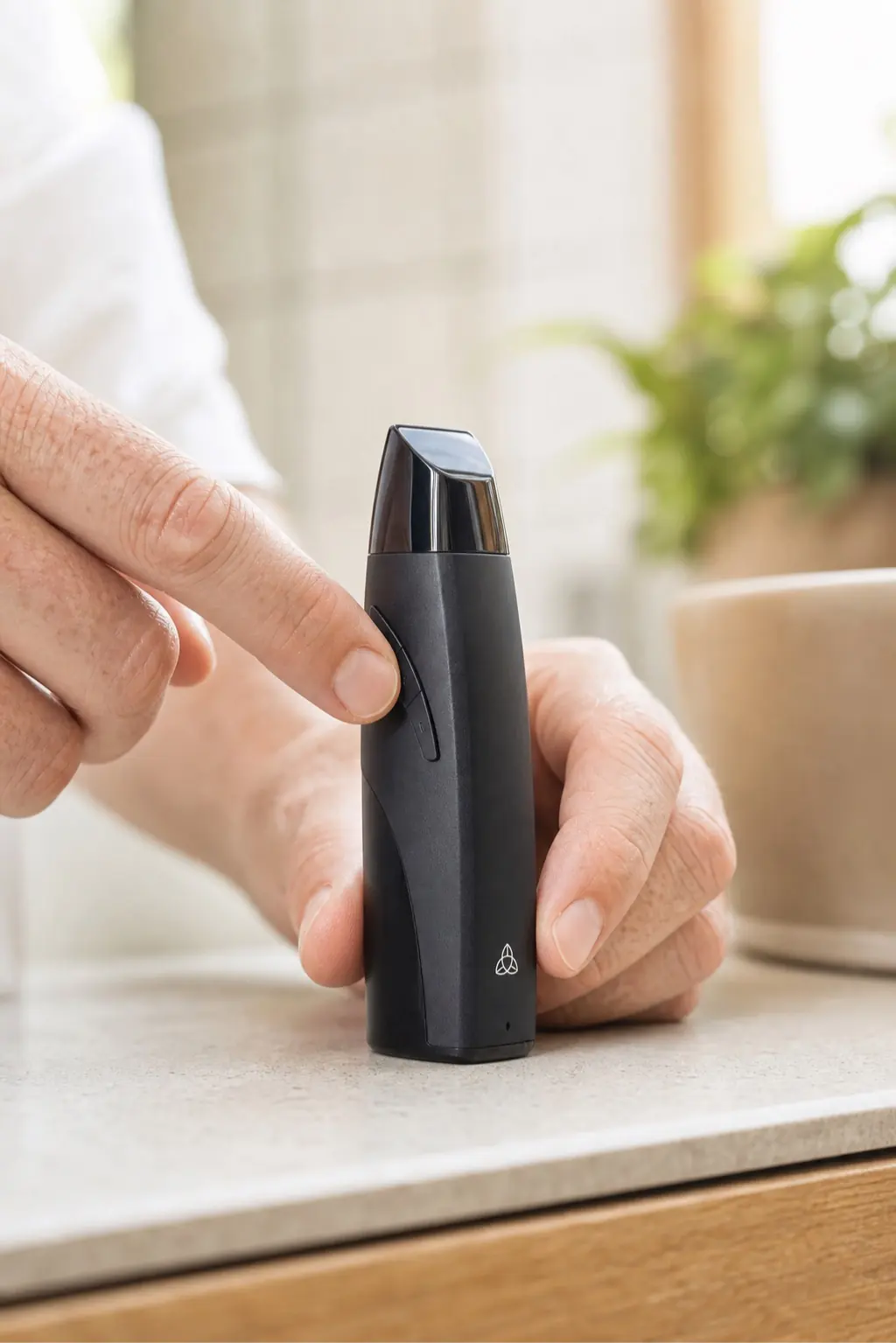
The Grenco Medical Elite II Vaporiser is listed on the ARTG as Entry 526764, with device class Class IIb and sponsor Mood State Medical Pty Ltd. The intended purpose statement in the public ARTG record describes the device for use at home, in a hospital, or in a doctor's office for vaporising cannabis flowers and inhaling cannabinoids derived from them, for the appropriate medical indication as prescribed by a physician, for patients older than 18 years of age.
The ARTG entry can be verified at the TGA website at any time by searching for entry number 526764 or for the sponsor name Mood State Medical. The live record is the authoritative source — any information on this page or in other materials should be verified against the current TGA record.
For the global certification picture: the Elite II also holds Health Canada HC MDL 113029 (Canada), Medsafe WAND registration (New Zealand), and MDSAP ISO 13485 manufacturing certification. These certifications cover different jurisdictions and are governed by each country's respective regulatory framework, but together they represent a consistent global standard of regulatory compliance for the device.
Instructions for Use and supporting documentation are available through the Grenco Medical document library. Patients or healthcare professionals with questions about the device's regulatory status can contact Mood State Medical directly as the Australian sponsor of record.